Important Tests during pregnancy help check the baby's growth and health, as well as the mother's well-being.
Contraction Stress Test: When a woman gets pregnant, there will be many tests performed, because early diagnosis in pregnancy can be life-saving for both mother and baby.
One of the tests is the CST test, which is done on a pregnant woman who is facing some complications in their pregnancy. If your baby’s heart rate is not normal, it should be. Also, if your Non-Stress test and Biophysical profile results are abnormal, your healthcare provider might suggest it.
Learn more about this Stress Pregnancy Test to know complete details of why it is done, what this test is, the procedure, the results, and more!!
- What is a Contraction Stress Test (CST) | Contraction Stress Test Purpose
- Who Needs This CST Test (Contraction Stress Test)
- How Does This Contraction Stress Test Procedure Done
- What Does Contraction Stress Test Results Mean
- Risks With This Oxytocin Challenge Test
- How often is this contraction stress test done?
- Who will not have this Contraction Stress test?
- What is the difference between a Contraction stress test vs Non-stress test?
- What are the other names of the Contraction Stress test?
- What is Contraction in Pregnancy?
What is a Contraction Stress Test (CST) | Contraction Stress Test Purpose
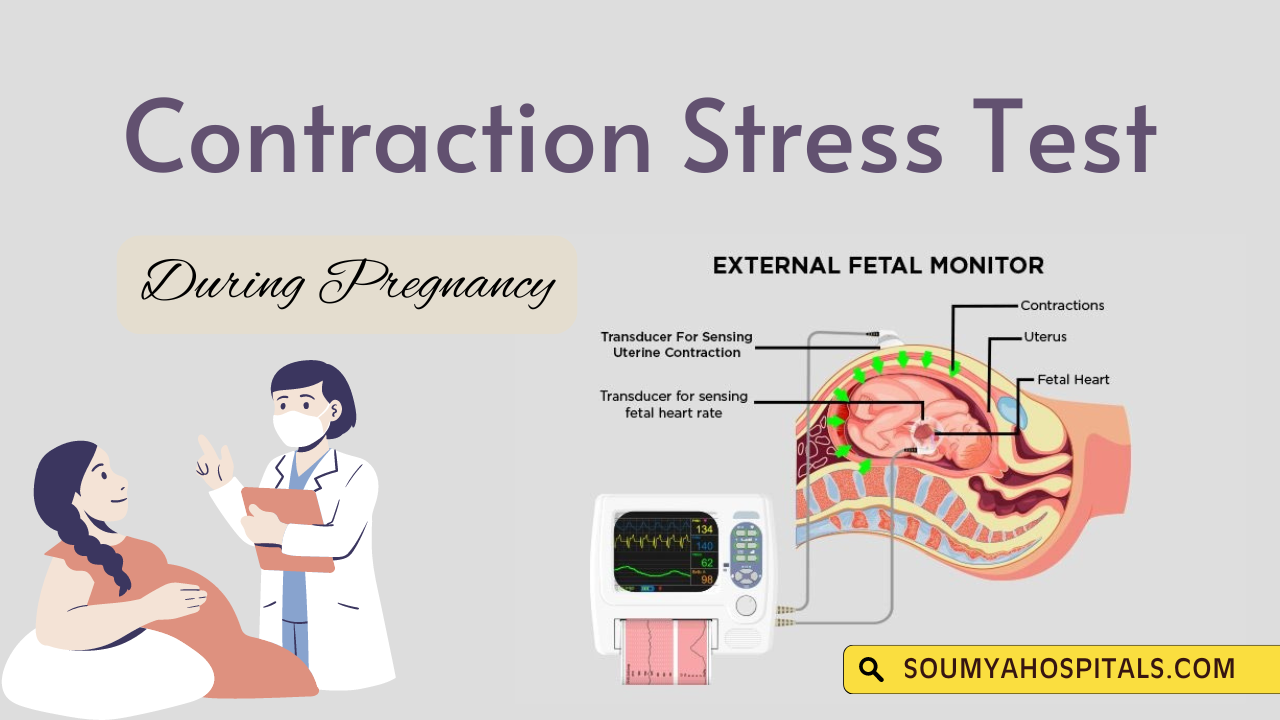
The contraction stress test is the test that will be done on the pregnant woman to check the heart rate and the oxygen levels of the baby in the mother’s womb. Also, this test will be done to check how the fetus can able to handle the contractions. For the test, your care provider will give you an oxytocin hormone that will make your uterus contrast, and these will be similar to labor contractions.
Mainly in this test, they also test whether your baby can able to tolerate the drop in blood and oxygen or not. This test is also called as stress test and Oxytocin challenge test.
Learn About: Non-Stress Test During Pregnancy
Who Needs This CST Test (Contraction Stress Test)
This CST test at 32 weeks will be recommended for persons who have abnormal results in the nonstress test and biophysical profile at 28 weeks of gestation.
Based on the results your health care provider repeats the test.
How Does This Contraction Stress Test Procedure Done
These contraction stress tests are outpatient tests in pregnancy which means the person can go home on the same day.
Before taking the test, you need to stop eating and drinking for eight to nine hours, and if you are a person with a smoking habit, that should stop even at least 2 hours.
Look into the procedure to know how this contraction stress test will be done step by step.
- First, when you go to the test they ask you to lie on the bed.
- Then, the nurse will wrap the two belts that have sensors to your belly. In those two sensors, one sensor will measure your baby’s heart rate, and the other sensor will record your contractions.
- Through the intravenous line, your provider will send the oxytocin hormone, and at the time of that, they may ask you to massage your nipples to release more oxytocin.
- As the sensor releases the heart rate of the baby, the provider will note it down.
- Once the doctor gets the needed information, then Oxytocin sent through IV will be discontinued.
- Then, after that, till contractions cease will be kept under observation.
What Does Contraction Stress Test Results Mean
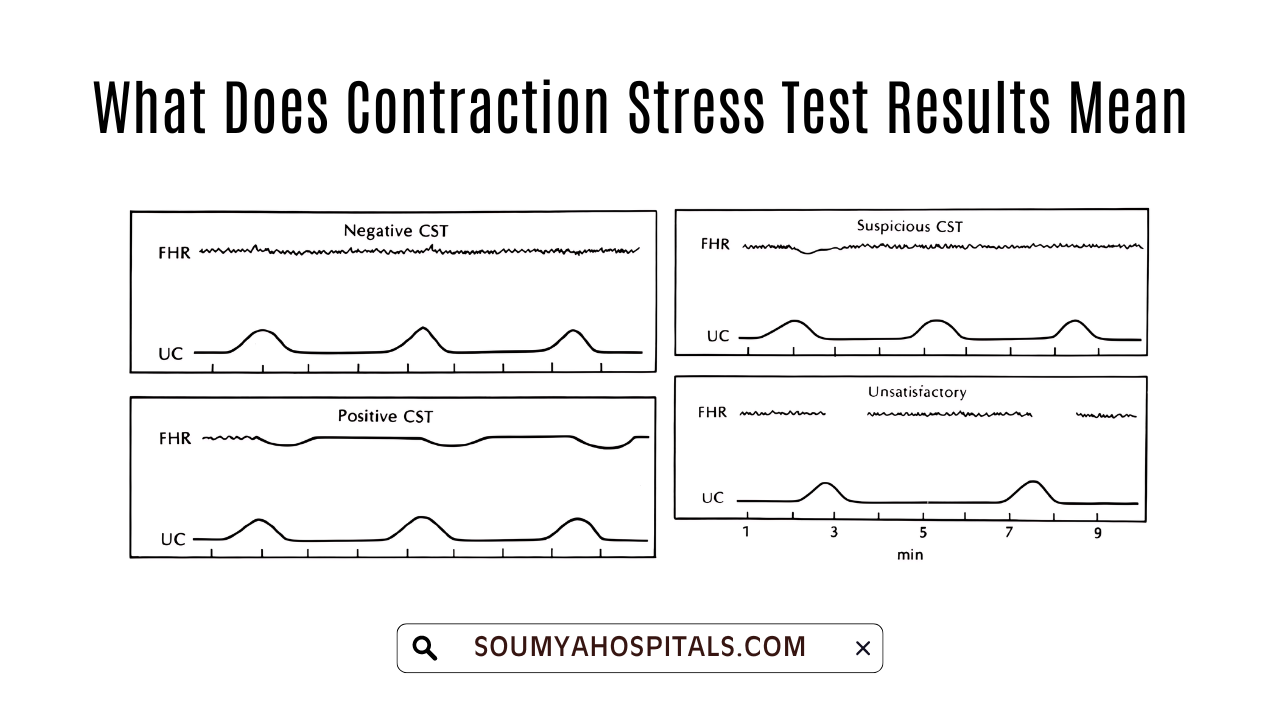
Once you complete the test, then the results also will be given right away as they have already been noted down. When it comes to results there will be normal and abnormal.
Contraction Stress Test Negative Result: If you get the report as negative then your results are normal, which means your baby’s heart rate does not decrease after a contraction.
Oxytocin Challenge Test Positive Result: If you get the CST test report as positive it means the results are abnormal and the baby’s heart rate becomes slow during contractions which will cause a concern during labor and delivery.
Risks With This Oxytocin Challenge Test
When you take this contraction stress test it is usually safe and painless. But the only risk that we have with this test might cause a preterm delivery.
If the pregnant woman is surviving with the risks of placenta previa, risk of uterine rupture, or a history of previous cesarean section.
FAQs on Stress Test in Pregnancy
1. How often is this contraction stress test done?
Based on the results that you get in this contraction stress test which is done at 34 weeks, your provider may schedule the test weekly in the last few weeks before pregnancy.
2. Who will not have this Contraction Stress test?
Pregnant women who are having twins, triplets, and more, will not have this CST test as they cannot go for normal delivery.
3. What is the difference between a Contraction stress test Vs Non-stress test?
A nonstress test will be done and check the heart rate of the baby without any outside pressure but it is the opposite in the CST test as they provide contractions during the fetal heart rate check.
4. What are the other names of the Contraction Stress test?
The other names of this contraction stress test are the Oxytocin Challenge test and the Stress Test.
5. What is Contraction in Pregnancy?
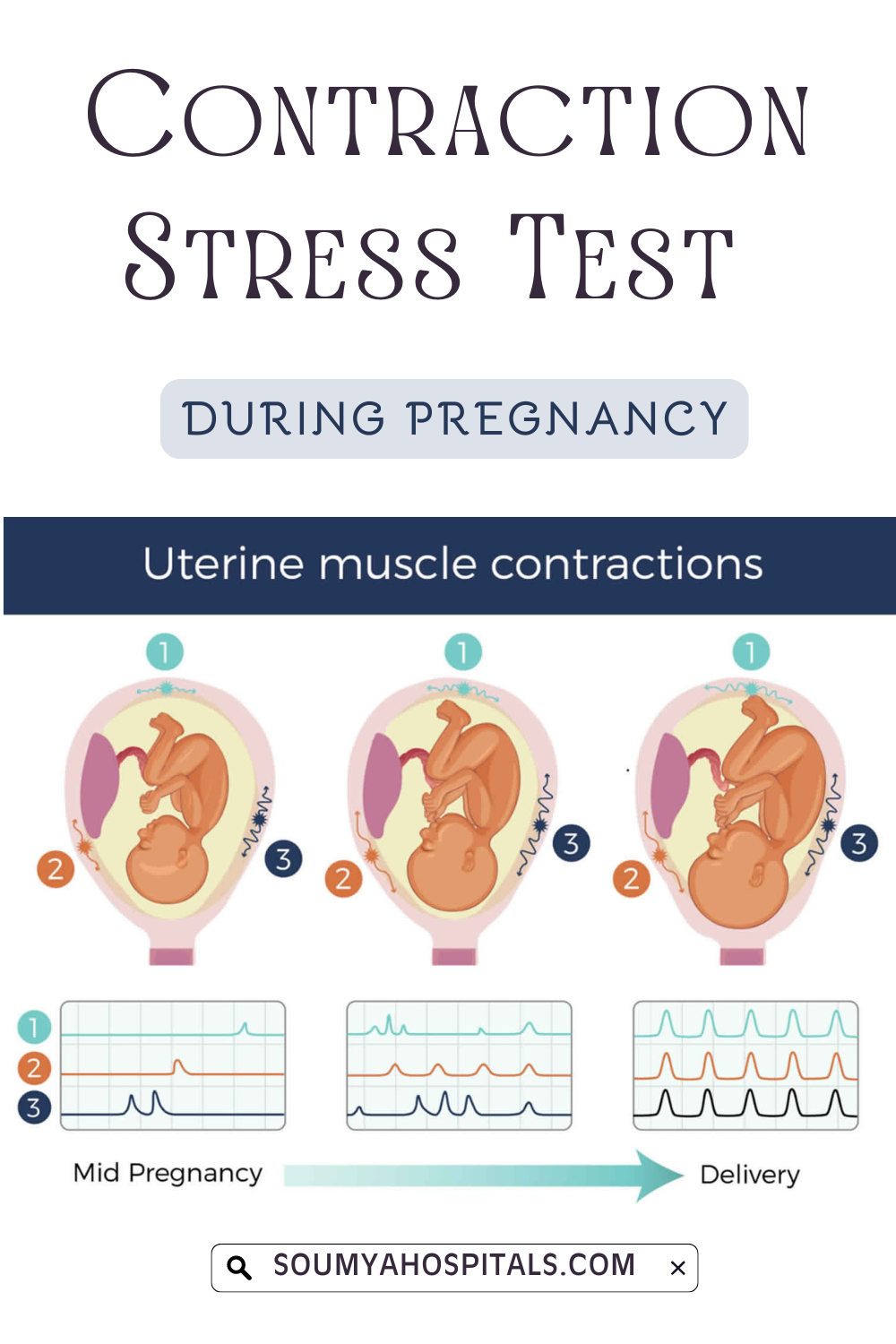
Contractions in pregnancy are nothing but when the muscles of your uterus tighten and relax. Contractions will help your baby to push out.
Conclusion
Contraction Stress Test will play a vital role in reducing childbirth complications and sometimes it will be lifesaving too.
Hope that the information we have provided on the Contraction stress test has given you an idea, about the test. Even check out other tests during pregnancy @soumyahospitals.com.